Sunday, November 19, 2023

Understanding the Signs That Your Car Brake Pads Need Replacement

Brake pads are a critical component of your car’s braking system. They are designed to grip the brake rotor and slow down or stop your vehicle when you apply the brakes. Over time, brake pads wear down due to friction and need to be replaced. It is important to be aware of the signs that your car’s brake pads are worn out to ensure your safety on the road.
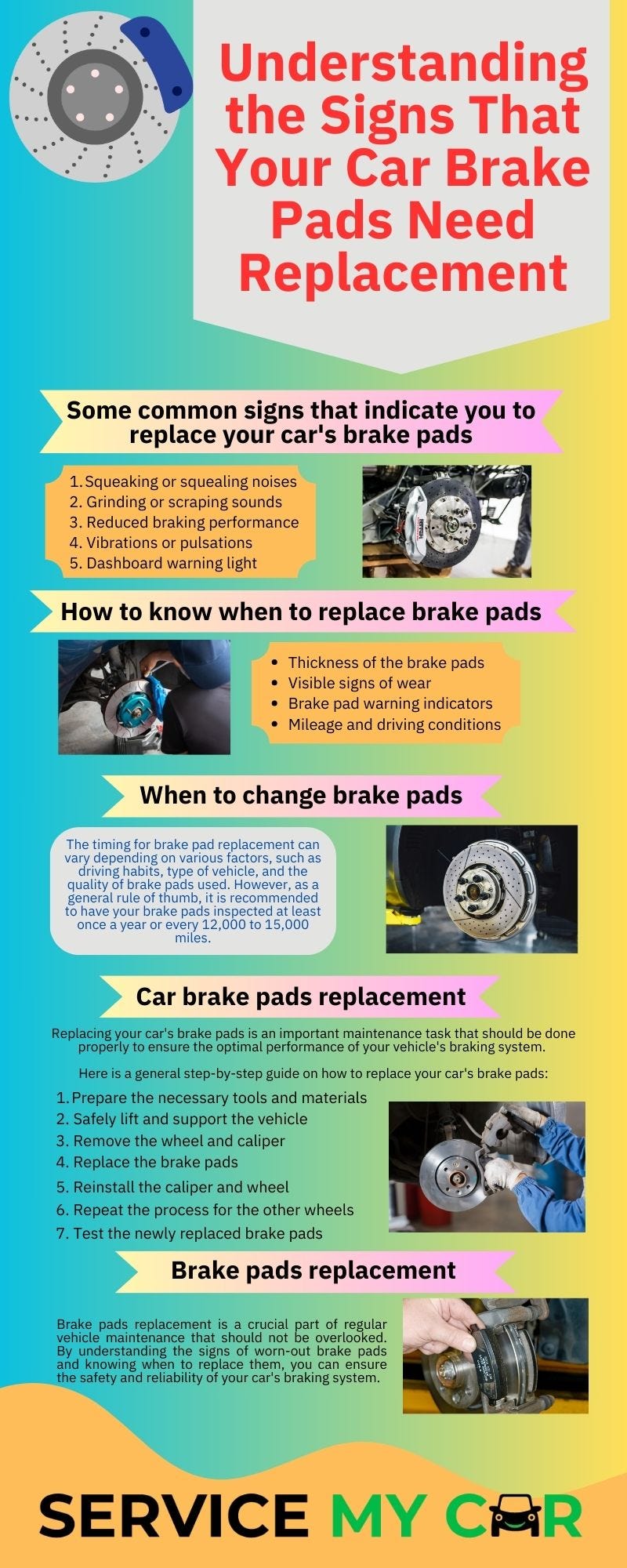
Here are some common signs that indicate you may need to replace your car’s brake pads:

  1. Squeaking or squealing noises: If you hear high-pitched noises when you apply the brakes, it could be a sign that your brake pads are worn out. This noise is often caused by a metal wear indicator, which is designed to make a noise when it comes into contact with the rotor.
  2. Grinding or scraping sounds: If you hear a grinding or scraping noise when you apply the brakes, it is a clear indication that your brake pads are completely worn out. In this case, the metal backing plate of the brake pad is grinding against the rotor, which can cause damage to both the pad and the rotor.
  3. Reduced braking performance: If you notice that your car takes longer to come to a complete stop or requires more effort to brake, it could be a sign that your brake pads are worn out. Worn brake pads have reduced friction and cannot grip the rotor effectively, leading to poorer braking performance.
  4. Vibrations or pulsations: When your brake pads are worn out, you may feel vibrations or pulsations in the brake pedal when you apply pressure. This can indicate that the brake pads are not making proper contact with the rotor, resulting in an uneven braking experience.
  5. Dashboard warning light: Many modern vehicles are equipped with a dashboard warning light that is designed to alert you when your brake pads are worn out. If this warning light illuminates, it is important to have your brake pads checked and replaced if necessary.

How to know when to replace brake pads


Knowing when to replace your car’s brake pads is essential for maintaining optimal braking performance and ensuring your safety on the road. Here are some key indicators that can help you determine when it’s time to replace your brake pads:

  • Thickness of the brake pads: Most brake pads have a minimum thickness specified by the manufacturer. You can visually inspect your brake pads or have them checked by a professional to ensure they meet the minimum thickness requirements. If the brake pads are too thin, they need to be replaced.
  • Visible signs of wear: Examine the surface of the brake pads for any signs of wear. If you notice significant grooving, cracking, or uneven wear, it is a clear indication that the brake pads are worn out and should be replaced.
  • Brake pad warning indicators: Some brake pads come with built-in wear indicators, such as metal tabs or grooves, that become exposed when the pads wear down. If you see these indicators, it means your brake pads are due for replacement.
  • Mileage and driving conditions: The lifespan of brake pads can vary depending on your driving style and conditions. If you frequently drive in stop-and-go traffic or make sudden stops, your brake pads may wear out faster. Additionally, if you have reached the recommended mileage for brake pad replacement, it is a good idea to have them inspected and replaced if necessary.

It is important to note that the signs and indicators mentioned above are general guidelines. Always consult your vehicle’s owner manual or seek professional advice for specific recommendations regarding your car’s brake pads.

When to change brake pads


The timing for brake pad replacement can vary depending on various factors, such as driving habits, type of vehicle, and the quality of brake pads used. However, as a general rule of thumb, it is recommended to have your brake pads inspected at least once a year or every 12,000 to 15,000 miles.

If you notice any of the signs mentioned earlier or if your brake pads have reached the minimum thickness specified by the manufacturer, it is important to change them promptly. Delaying brake pad replacement can lead to further damage to the braking system, including the rotors, calipers, and brake lines.

Regular maintenance and inspection of your brake pads can help prevent costly repairs and ensure your safety on the road. If you are unsure about the condition of your brake pads, it is always best to consult with a qualified mechanic or schedule a service appointment with a trusted automotive shop.

Car brake pads replacement


Replacing your car’s brake pads is an important maintenance task that should be done properly to ensure the optimal performance of your vehicle’s braking system. While it is always recommended to have a professional mechanic perform this task, if you have the necessary knowledge and tools, you can replace the brake pads yourself.

Here is a general step-by-step guide on how to replace your car’s brake pads:

  1. Prepare the necessary tools and materials: To replace your brake pads, you will need a jack or lift, lug wrench, C-clamp or brake caliper piston tool, brake cleaner, high-temperature grease, new brake pads, and potentially new brake hardware.
  2. Safely lift and support the vehicle: Before starting any work, ensure you follow proper safety procedures. Use the jack or lift to elevate your vehicle and secure it with jack stands. This will provide you with enough space to access the brake calipers and pads.
  3. Remove the wheel and caliper: Use a lug wrench to loosen the lug nuts and remove the wheel. Then, remove the brake caliper by loosening the bolts or pins that secure it to the brake rotor. Be careful not to damage the brake line.
  4. Replace the brake pads: Once the caliper is removed, you can access the brake pads. Take note of the orientation of the old brake pads and carefully remove them. Install the new brake pads using any necessary clips or hardware included with the pads.
  5. Reinstall the caliper and wheel: Before reinstalling the caliper, ensure the brake piston is fully retracted using a C-clamp or brake caliper piston tool. This will allow enough space for the new, thicker brake pads. Once the caliper is back in place, tighten the bolts or pins. Then, reinstall the wheel and tighten the lug nuts.
  6. Repeat the process for the other wheels: Brake pads should always be replaced in pairs, so repeat the above steps for the remaining wheels.
  7. Test the newly replaced brake pads: After replacing all the brake pads, lower the vehicle and test the brakes before driving. Pump the brake pedal a few times to ensure the pads make proper contact with the rotors.

Brake pads replacement


Brake pads replacement is a crucial part of regular vehicle maintenance that should not be overlooked. By understanding the signs of worn-out brake pads and knowing when to replace them, you can ensure the safety and reliability of your car’s braking system.

If you are unsure about the condition of your brake pads, it is always recommended to consult with a professional mechanic. These experts have the knowledge and experience to properly diagnose any issues with your brake pads and perform the necessary replacements or repairs.

Remember, your brakes are one of the most important safety features in your car. Don’t take any chances when it comes to the condition of your brake pads. Stay vigilant, be aware of the signs of wear, and take prompt action to replace your brake pads when needed.

How Service My Car Assists You?

Have you reached a point where you’re questioning, “Where can I find the top garage in Bolton for my car?” Look no further. At Service My Car, we provide premium car servicing, repair, and maintenance services, always within your reach. With specialized service offerings for the car and comprehensive service packages, we ensure the collection and drop-off of your vehicle following its maintenance.

If you have another car like a Mini, then Service My Car offers a mini garage bolton that seems to provide comprehensive services for a Mini enthusiast. The skilled technicians at the garage are likely to take good care of your vehicle and ensure its optimal performance.​

Friday, October 20, 2023

Common Problems with Suzuki Vehicles: A Comprehensive Guide


Suzuki vehicles have long been recognized for their reliability, but like any car, they are not immune to issues. Whether you already own a Suzuki or are considering buying one, it’s crucial to be aware of the most common problems that can arise. By familiarizing yourself with these issues, you can detect and address them early on, preventing more significant damage and costly repairs. In this guide, we will explore the most prevalent problems encountered in Suzuki vehicles, providing you with valuable insights to keep your car running smoothly.

Headlight Overheating: A Persistent Concern


One common issue that Suzuki vehicles, particularly the Grand Vitara, face is headlights overheating. This problem is often attributed to a defective electrical system, which causes the headlights to burn out frequently and prematurely. Of particular concern are the daytime running lights, as the system can generate excessive heat, posing a fire risk. It is crucial to address this issue promptly to ensure your safety on the road.

Excessive Engine Oil Consumption: Swift Diesel Woes


Another prevalent problem observed in certain Suzuki models, such as the Swift diesel (both first and second generation), is excessive engine oil consumption. Owners have reported that their vehicles consume oil at a faster rate than normal, even after routine servicing. This issue is typically caused by head gasket problems and should be addressed promptly to avoid more severe engine damage. Neglecting this issue may lead to costly repairs and potential safety hazards.

Power Steering Troubles: The Case of 2012 and 2013 Suzuki SX4


Owners of the 2012 and 2013 Suzuki SX4 have reported issues with the power steering system, particularly during cold weather conditions. Problems with the power steering pumps can result in poor performance and potentially compromise the vehicle’s steering, leading to hazardous driving situations. Suzuki acknowledged this problem and issued a recall, but it is essential to check the repair history if you own or plan to purchase one of these models.

The MPG Controversy: False Readings and Economic Considerations


Suzuki faced criticism for incorrect MPG (miles per gallon) readings, which were later found to be the result of an erroneous test. Millions of Suzuki vehicles were providing inflated MPG readings due to the incorrect calculation method employed by the company. While this issue does not directly affect the driving experience, it is crucial to consider accurate fuel efficiency information when looking for an economical vehicle for your daily commute.

Other Potential Issues to Be Aware Of


In addition to the aforementioned common problems, there are a few other issues that Suzuki owners should be mindful of. These include:

1. Air Conditioning Failures and Refrigerant Leaks

Some Suzuki models have been reported to experience air conditioning failures, often due to refrigerant leaks. It is essential to have your vehicle’s air conditioning system regularly inspected and maintained to avoid discomfort during hot weather and costly repairs.

2. Transmission Problems in Automatic Models

Certain Suzuki models equipped with automatic transmissions have experienced issues, such as rough shifting or transmission failure. Regular maintenance and periodic inspections can help detect and address these problems before they escalate.

3. Suspension and Steering Components

Suzuki vehicles, like any other car, may encounter problems with suspension and steering components over time. Worn-out bushings, ball joints, and tie rod ends can result in poor handling and compromised safety. Regular inspections and proactive maintenance can prolong the lifespan of these components and prevent potential issues.

4. Electrical System Malfunctions

Electrical system malfunctions can occur in Suzuki vehicles, causing various issues such as malfunctioning windows, door locks, or faulty dashboard displays. These problems may be due to wiring issues, blown fuses, or faulty switches. Regular diagnostics and prompt repairs can help maintain the functionality of the electrical system.

If you are facing battery or power related problem in your car visit Service My Car for swift and professional car battery replacement. Our skilled technicians ensure a seamless installation with high-quality batteries, restoring your vehicle's reliability. Trust us for efficient service, so you can hit the road with confidence.

5. Brake System Concerns

While Suzuki vehicles generally have reliable brake systems, it is crucial to regularly inspect and maintain them. Brake pad and rotor wear, as well as brake fluid contamination, can compromise braking performance and increase stopping distances. Timely maintenance and proactive replacement of worn-out components are essential for optimal safety on the road.

Conclusion

Suzuki vehicles have a reputation for reliability, but it is essential to be aware of common problems that may arise. By staying informed about issues such as headlight overheating, excessive engine oil consumption, power steering troubles, and the MPG controversy, you can take proactive measures to address these concerns promptly. Additionally, being mindful of other potential issues like air conditioning failures, transmission problems, suspension and steering component wear, electrical system malfunctions, and brake system concerns can help maintain the longevity and performance of your Suzuki vehicle. Regular maintenance, timely repairs, and professional servicing are key to ensuring a trouble-free driving experience.

Wednesday, October 4, 2023

Common Myths About Buying Used Cars

The allure of a brand-new car is undeniable. The fresh scent, the latest features, and the comforting embrace of a manufacturer's warranty all contribute to the appeal. However, these new vehicles come with a price tag, especially for the latest models. This is where pre-owned cars step into the picture as a sensible choice for those seeking budget-friendly options. Unfortunately, various myths surrounding used cars can cloud judgment and cause potential buyers to miss out on excellent vehicles.


We aim to dispel some of these common myths about buying used cars to empower buyers to make informed, rational decisions.


Buying Used Cars in the UAE


The used car market in the UAE thrives, offering numerous benefits that make pre-owned vehicles increasingly appealing. Beyond their relatively lower prices, used cars provide the flexibility to switch to and experience various models conveniently. Key players in the market, such as Service My Car cars, simplify the buying process with their offerings. Nevertheless, individuals who haven't purchased a pre-owned vehicle or have had negative experiences may harbor doubts about taking this step. These uncertainties are often exacerbated by prevalent myths about used cars, and it's crucial to uncover the truth behind these misconceptions.


Used Cars Myths


As myths can significantly influence buyer decisions, it's vital to understand the reality behind them. Equipped with this knowledge, buyers can also steer clear of potential pitfalls, such as used car scams. Now, let's explore some common myths about buying used cars to help individuals make well-informed decisions. These insights will also prove valuable when purchasing a vehicle from a car auction in Dubai.


Myth 1 – Used Cars Are Mostly Damaged


One pervasive myth suggests that pre-owned vehicles are likely to be in poor condition. However, there's no factual basis for this belief. Properly maintained vehicles can remain in excellent shape for many years. Additionally, the mere fact that a car is up for sale does not necessarily indicate a problem with the vehicle. People may sell their cars for various reasons, such as relocating to a different country or upgrading to a newer model. To ensure a safe transaction, it's wise to follow a used car buying checklist to secure the best deal.


Myth 2 – You Can Only Buy a Car in Cash


Another common misconception is that purchasing a used car can only be done with cash. In reality, numerous car financing options are available in the UAE, and they are not limited to new vehicles. Individuals looking to buy a used car can take advantage of these financing services. While the terms may vary from service to service, there is no obligation to pay for a car solely in cash.


Myth 3 – You Overpay for a Used Vehicle


It is often believed that buyers overpay for used cars. While new cars typically experience some depreciation after purchase, this doesn't mean that buyers are overpaying for used vehicles. Even after being used, cars retain value. Furthermore, a used car in excellent condition will come with a fair price tag. To estimate a vehicle's value, there are methods for conducting a used car evaluation.


Myth 4 – Used Vehicles Have Poor Resale Value


Another misconception is that pre-owned cars have poor resale value. In reality, nearly every vehicle experiences depreciation after it is sold. However, the resale value depends on various factors, including the vehicle's model and demand in the market. For instance, electric cars continue to gain popularity, and sellers can sometimes receive offers greater than the car's original price.


Myth 5 – Used Cars Have Poor Fuel Efficiency


A prevalent myth suggests that pre-owned vehicles have poor fuel efficiency. However, a car's fuel efficiency is more closely tied to its model than its age. Modern vehicles, whether new or old, may come equipped with features designed to improve fuel efficiency. Buyers who opt for a pre-owned version can enjoy these features at a relatively lower price.


Myth 6 – There Is No Warranty for Used Cars


Warranties provide buyers with a sense of security. However, it's a common myth that used cars do not come with warranties. While this may be true for some services, it doesn't apply across the board. Many platforms offer extended auto warranties in the UAE for used vehicles. Those looking to add an extra layer of protection to their cars can opt for these services.


Myth 7 – You Cannot Take a Test Drive in a Pre-Owned Car


Test drives offer valuable insights into a vehicle's condition and performance. Importantly, test drives are not exclusive to new cars. Most services offer test-driving facilities for used cars to ensure that buyers are fully satisfied with their purchases. To make the most of the experience, consider following tips for test-driving a used car.


Service My Car CARS – Your Premier Used Cars Portal in the UAE


Amid the multitude of myths surrounding used cars and the array of offerings available, buyers can sometimes feel overwhelmed. This is where Service My Car cars step in, with their extensive experience and offerings. With a range of financing, insurance, and value-added services, Service My Car cars streamline the process of buying and selling used vehicles. Drive with confidence, drive Skoda in Dubai. Explore the European excellence of skoda for sale in dubai at Service My Car. From stylish design to innovative technology, each Skoda model promises a driving experience that blends luxury with affordability on Dubai's roads.

A Comprehensive Guide to Common Issues with the MG ZS: Troubleshooting and Solutions

The MG ZS, a subcompact crossover SUV produced by SAIC Motor under the MG brand, has gained popularity globally for its sleek design and aff...